Attic mold usually comes from roof leaks, ice dams that force melt water under shingles, or warm indoor air escaping into a cold attic and condensing on the roof deck. Cleanup means fixing the source and removing or cleaning the affected material. Call the number on this page to be connected with a local mold company in Denver.
Why attics grow mold in a dry climate
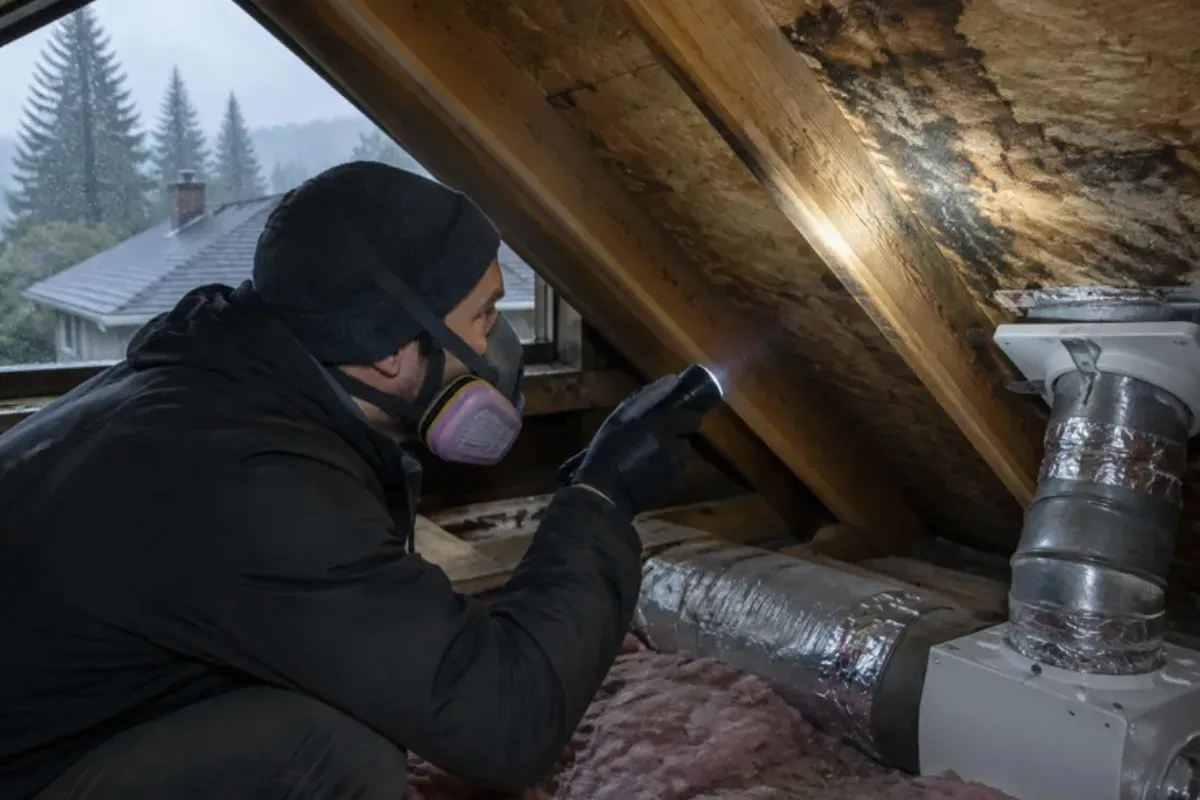
Metro Denver Economic Development, citing NOAA, lists Denver's average annual precipitation at 15.6 inches, so the outdoor air is not the issue. The problem is what happens at the roof. Heavy snow followed by sun and cold nights can create ice dams that push melt water under shingles. In winter, warm indoor air that leaks into the attic through gaps around lights, vents and bath fans meets a cold roof deck and condenses. Bath and dryer vents that end in the attic instead of outside add more moisture.
Signs to look for
- Dark or fuzzy patches on the underside of roof sheathing or on rafters.
- Insulation that is matted, stained or damp.
- Rusted nail tips or frost on the deck in cold weather.
- Ceiling stains below, or a musty smell on the upper floor.
Attics are tight, hot and hard to work in, which is one reason people call a pro. EPA treats about 10 square feet as the size many people can handle themselves, and says to use its remediation guidance for larger areas or significant water damage. If anyone has health concerns, talk with your doctor.
What happens
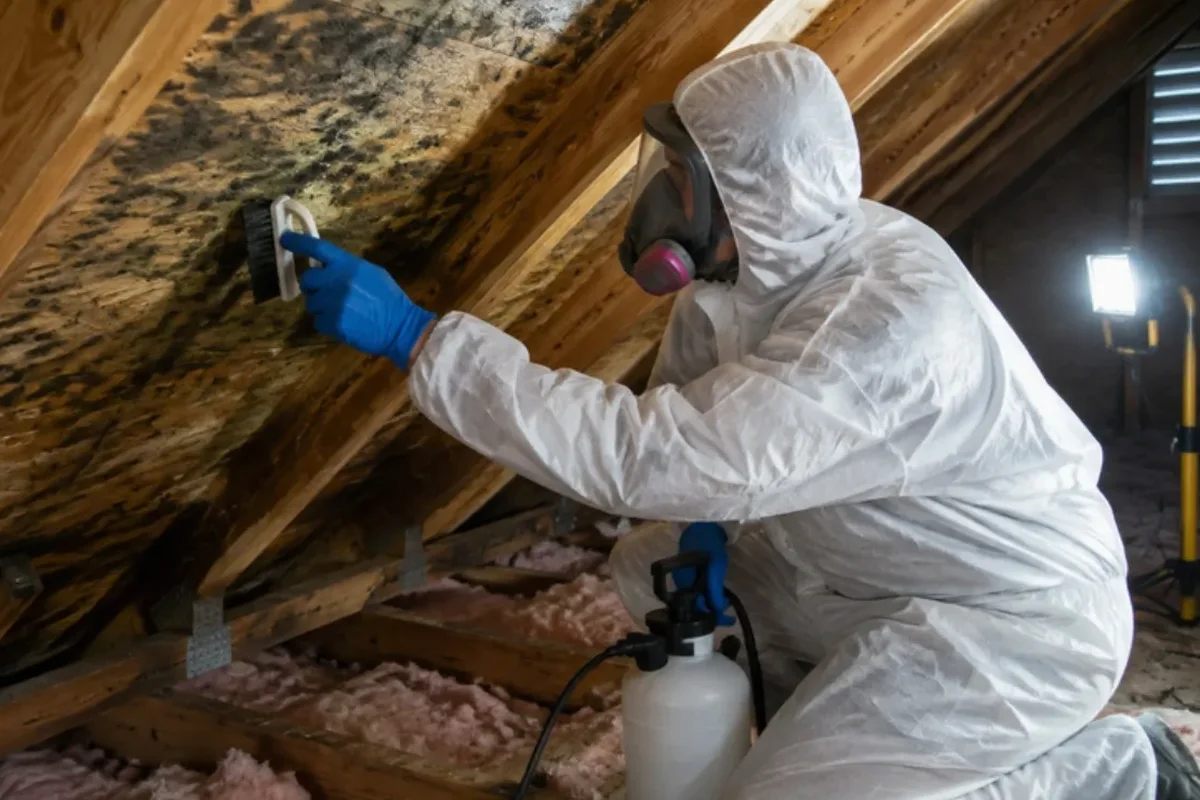
A local mold company looks at the extent of the growth and finds the moisture path. Typical work includes containing the attic hatch and work zone, removing wet or contaminated insulation, cleaning the wood, and drying. The company may also point out ventilation or air-sealing gaps, though roof repair, new vents and re-insulating are often done by roofing or insulation contractors.
What it costs
A Denver cost guide (Angi) lists attic mold remediation at $1,000 to $4,000 per project. Roof repair, added ventilation and new insulation are usually separate from that figure, so ask what the quote includes.
Hiring check
Colorado has no state mold license, so there is nothing at the state level to verify. Contractor licensing is local: the City and County of Denver issues its own contractor licenses and does not accept those from other counties or states. Ask who holds the local contractor license for the roofing or building work, and check with Denver Community Planning and Development about permits.
Renters
If an attic or roof leak is causing dampness and mold in your unit, Colorado's warranty of habitability can apply after you give your landlord written notice. In Denver, the Denver Department of Public Health & Environment takes residential housing complaints.
Attic Mold Removal questions from Denver homeowners
Is attic mold common in Denver?
Do I need testing before attic mold removal?
How much does attic mold removal cost in Denver?
Will the mold come back after cleanup?
Related mold services in Denver
Helpful guides
Attic Mold Removal in nearby cities and towns
Arapahoe County
Jefferson County
Adams County
Douglas County
Boulder County
Broomfield County
Weld County
Gilpin County
Clear Creek County
Sources
Last updated: