Mold in a wall usually comes from water that got in behind the drywall: a plumbing leak, a roof or window leak, or seepage through a foundation wall. The visible patch can be smaller than what is behind it. Call the number on this page to be connected with a local mold company in Denver.
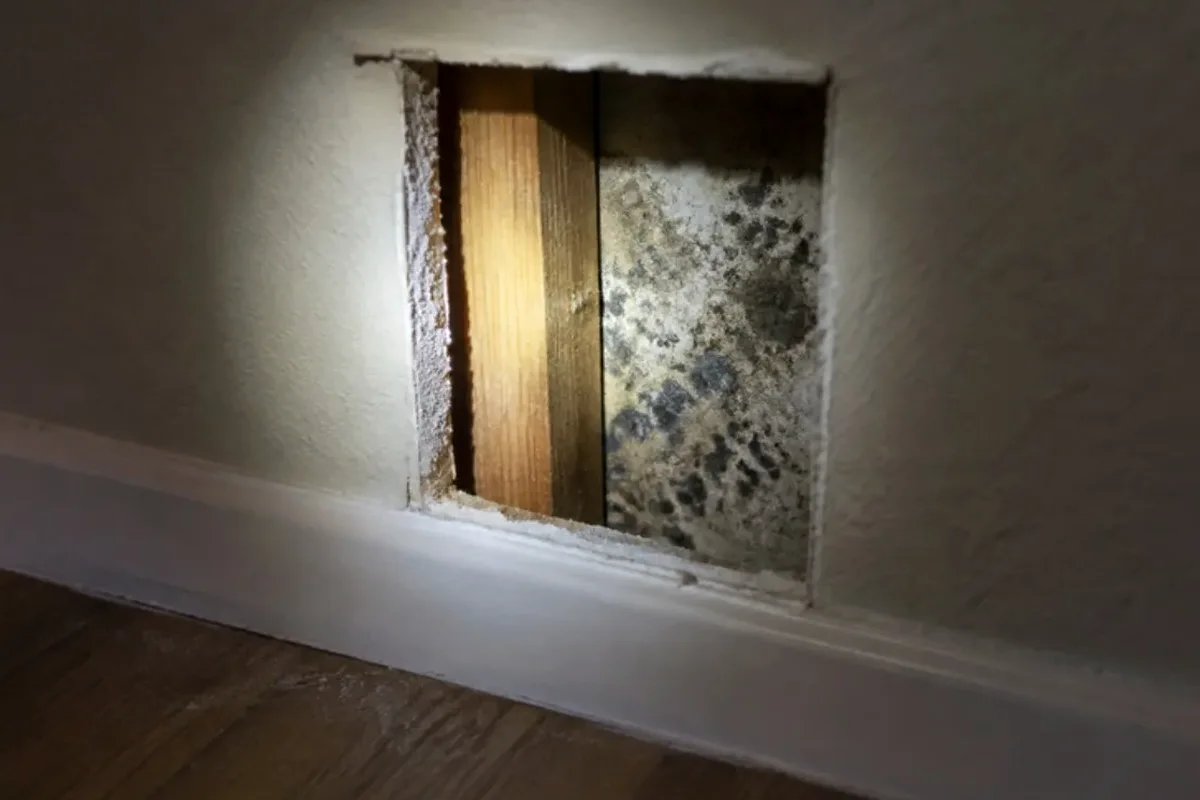
What wall mold looks like
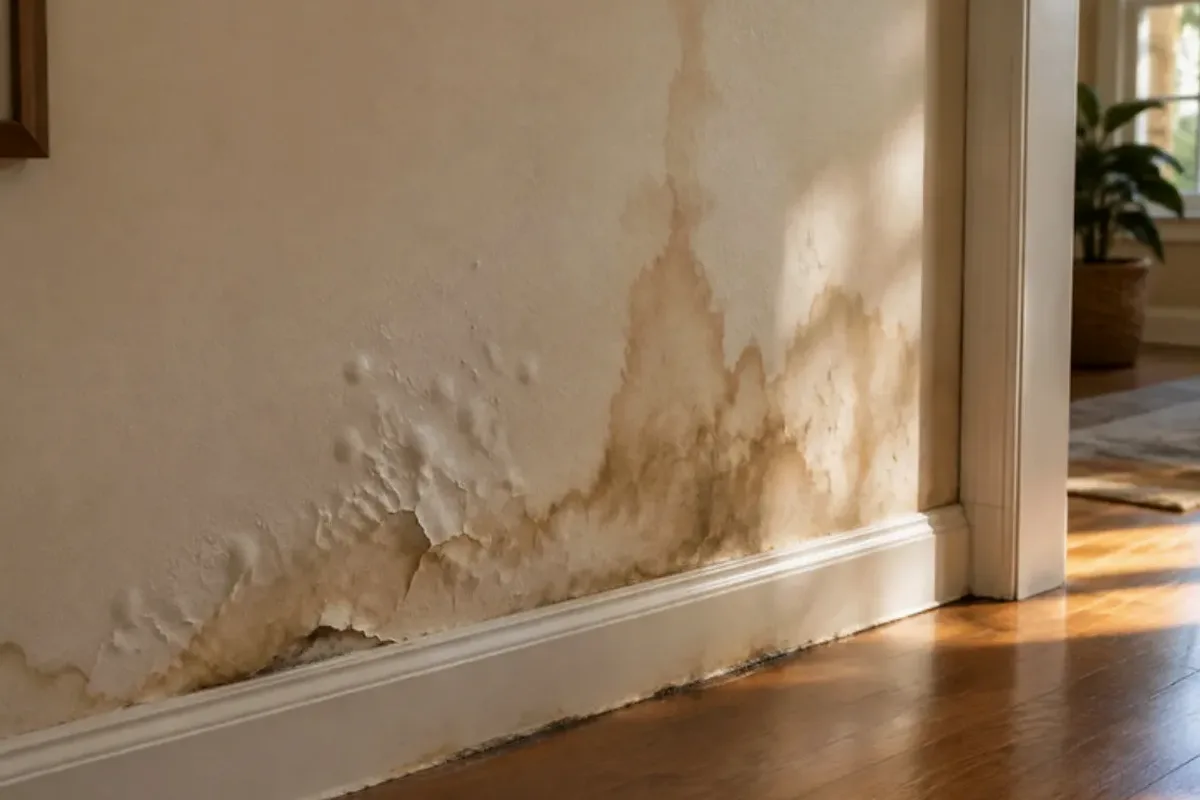
Signs include discolored patches, paint that bubbles or peels, soft or warped drywall, wallpaper that lifts, and a musty smell near one wall. Sometimes nothing shows on the surface, and the growth sits on the back of the drywall or on insulation and framing. A local mold company can use moisture meters and, where needed, small openings to see how far it goes.
Where the water comes from in Denver homes
Denver's outdoor air is dry, so wall mold generally traces to a specific leak. Common sources are a supply line or drain inside the wall, a washer hose, a burst pipe after a hard freeze, a roof leak or ice dam after snow, a poorly sealed window, and moisture coming through basement walls. Older brick homes and finished basements are frequent trouble spots because walls close in around plumbing and foundation seams.
What happens during cleanup
- Find and stop the moisture source. Plumbing or roof repairs come first.
- Contain the area so spores do not travel through the house.
- Remove drywall, insulation or trim that is affected. Porous materials are generally removed, not cleaned.
- Clean framing, then dry the cavity fully.
- Rebuild: new drywall, texture and paint, often done by a separate contractor.
EPA says areas under about 10 square feet are ones many people can handle themselves, and it points to its remediation guidance for larger areas or significant water damage. It also says that where mold is visible, sampling is usually unnecessary. If you have health concerns, talk with your doctor.
What it costs
A Denver cost guide (Angi) lists mold in walls at $1,000 to $20,000 per project, a wide range that reflects how much wall is opened up. The same guide lists drywall repair after mold removal at $1,000 to $2,900 per project, so ask whether rebuild work is in the quote.
Hiring check
Colorado has no state mold license. Contractor licensing is local, and the City and County of Denver issues its own contractor licenses and does not reciprocate those from other counties or states. Ask who holds the local contractor license, request a written scope, and check whether the plumbing or rebuild work needs a permit from Denver Community Planning and Development.
If you rent
Under Colorado's warranty of habitability, mold associated with dampness can make a rental uninhabitable, though minor surface mold is excluded. Colorado Legal Services says a landlord is not required to act until told in writing, and must begin within 24 hours for urgent problems and 96 hours for less urgent ones. In Denver, the Denver Department of Public Health & Environment takes residential housing complaints.
Mold in Walls questions from Denver homeowners
Can I paint over mold on a wall?
How do I know if mold is inside the wall?
Is wall mold covered by my landlord's duties in Denver?
How much does it cost to remove mold from a wall in Denver?
Related mold services in Denver
Helpful guides
Mold in Walls in nearby cities and towns
Arapahoe County
Jefferson County
Adams County
Douglas County
Boulder County
Broomfield County
Weld County
Gilpin County
Clear Creek County
Sources
Last updated: