Bathroom and kitchen fans that end in the attic instead of outdoors are a common culprit. Moist air has nowhere to go, so it condenses on the sheathing. Ducting the fans outside is part of fixing the mold. Call the number on this page to be connected with a local mold company in Englewood.
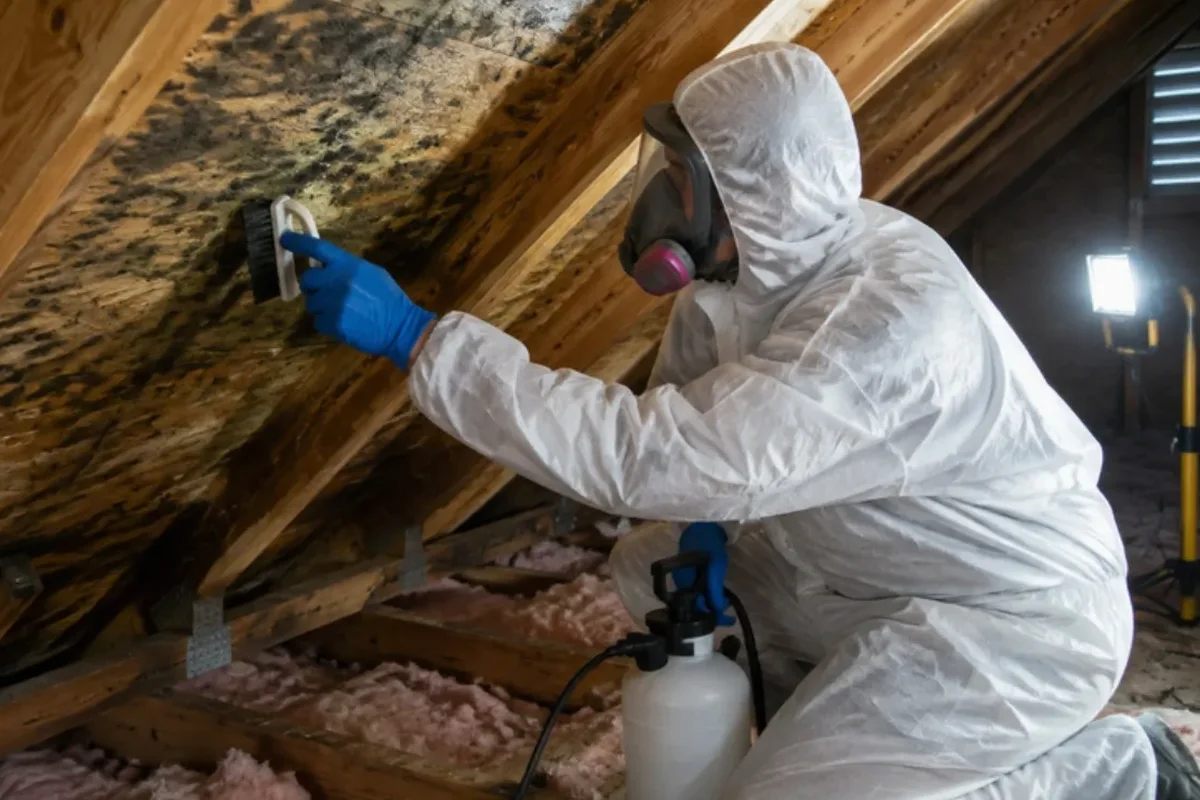
What a wet attic shows
Open the hatch with a flashlight. Dark speckles on sheathing, rusty nail tips, matted or discolored insulation, a musty odor and water stains around the chimney or vents all point to moisture. Wear a mask and avoid kneeling on the insulation if the floor is soft.
Evaporative coolers and attic equipment
Roof-mounted swamp coolers, attic air handlers and chimney flues sit in or through attic space. A leaking cooler line, a dripping air handler pan or a poorly sealed flue can wet one corner of the attic while the rest stays dry. Both matter equally here.
Homes in Englewood built in the 1960s commonly have older roof decking, minimal soffit ventilation and later insulation piled over openings, so attics there deserve a careful look.
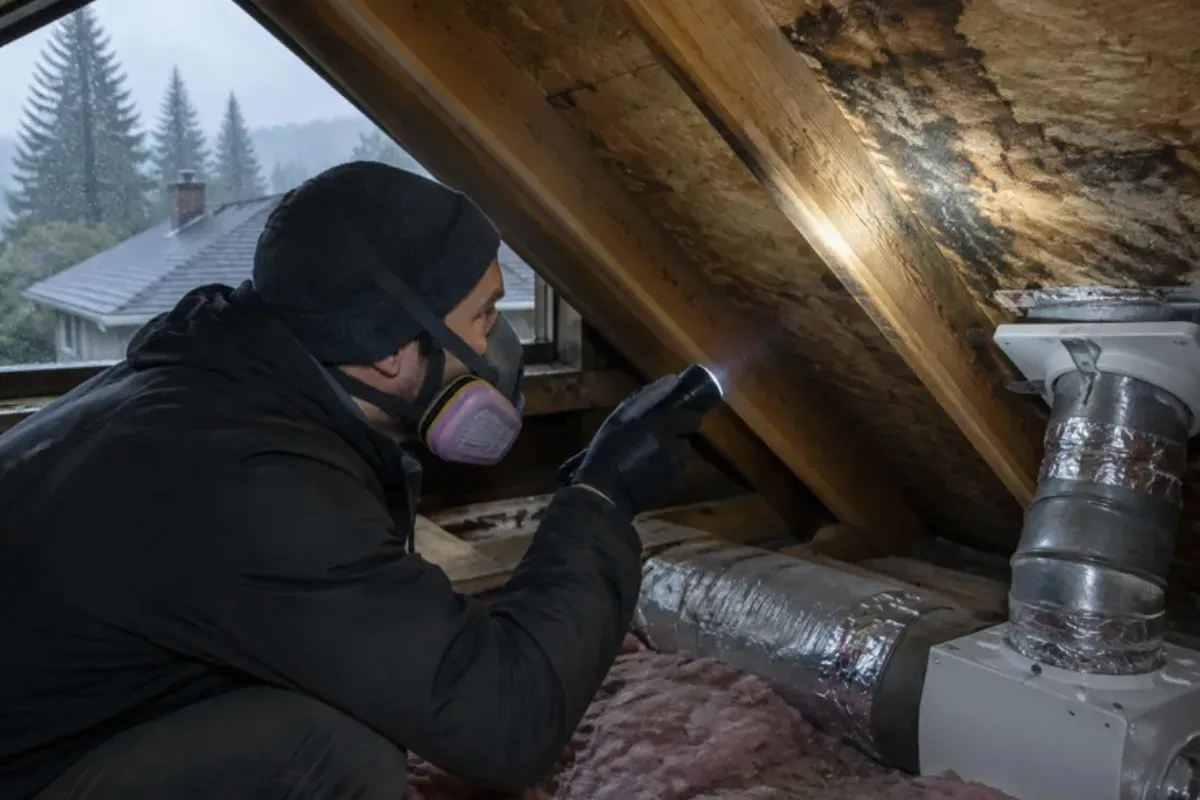
Insulation choice
Loose-fill, batts and spray foam each respond differently to moisture. Removing blown cellulose or fiberglass is a big part of many jobs, and spray foam is handled differently. Ask the company what type you have, and what will replace it afterward. Each one can wet attic wood and insulation.
The first look
A company usually enters the attic with a flashlight, moisture meter and camera, checks the roof deck from below, probes the insulation and traces the fans and soffits. It asks about leaks, past roofing work and how the bath fan is used before suggesting a plan. Detail helps comparison.
Duct every fan outside
The most useful single fix in many older homes is running the bathroom and kitchen exhausts through the roof or a wall to the outdoors, with a tight, insulated duct. A fan that ends in the attic keeps feeding moisture into the cold space all winter.
Useful local contacts for Englewood
Colorado leaves contractor licensing to cities and counties and has no mold-specific license. Ask the company up front which local license covers any drywall or framing it replaces.
If the job grows into replacing drywall, cabinets or framing, ask whether the rebuild needs a permit from the Englewood Building Division.
Tenants should report mold to the landlord in writing first; Colorado law treats mold associated with dampness as a habitability issue, with set response times after notice.
Companies that take calls here usually also work in Littleton, Lone Tree and Louviers.
More about Englewood
Calls come in from across Englewood, including around South Broadway, Hampden Avenue (US 285), CityCenter Englewood.
Expansive clay soils are common along the Front Range, and cracked basement floor slabs are one of the usual signs of swelling ground.
Attic Mold Removal questions in Englewood
Will the roof need to be replaced?
Do soffit vents really matter?
Is attic testing needed?
My older house has little attic ventilation. Is that a cause?
More mold services in Englewood
Attic Mold Removal nearby
Helpful guides
Sources
Last updated: