EPA says porous materials that stay moldy usually have to be removed, and that applies to ceiling tile, carpet and insulation in commercial spaces too. A local company can sort out what stays and what goes. Call the number on this page to be connected with a local mold company in Firestone.
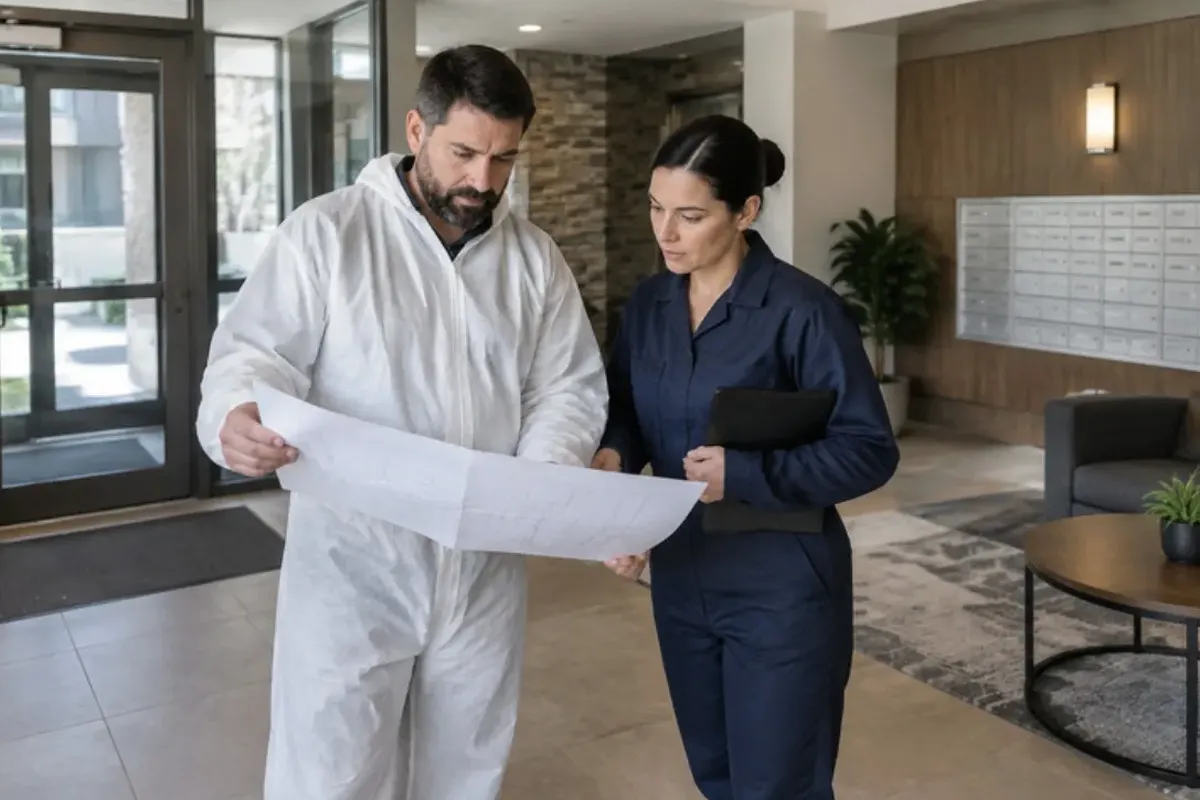
Small spot versus whole suite
EPA says a homeowner can usually clean under about 10 square feet, but that guidance is aimed at homes. In a commercial setting, even a modest patch may involve shared air handling, lease duties or staff concerns, so many managers hand off even small areas to a local company.
Slab and foundation moisture
Expansive clay soils along the Front Range can shift slabs and crack foundation walls. Water from irrigation, downspouts or snowmelt then moves toward lower levels. Below-grade storage, mechanical rooms and finished basement suites are the usual places to find damp drywall and floor coverings.
Out on the plains, big-footprint buildings and long drives mean planning matters, so describe the space and send photos before a crew makes the trip.
Comparing bids
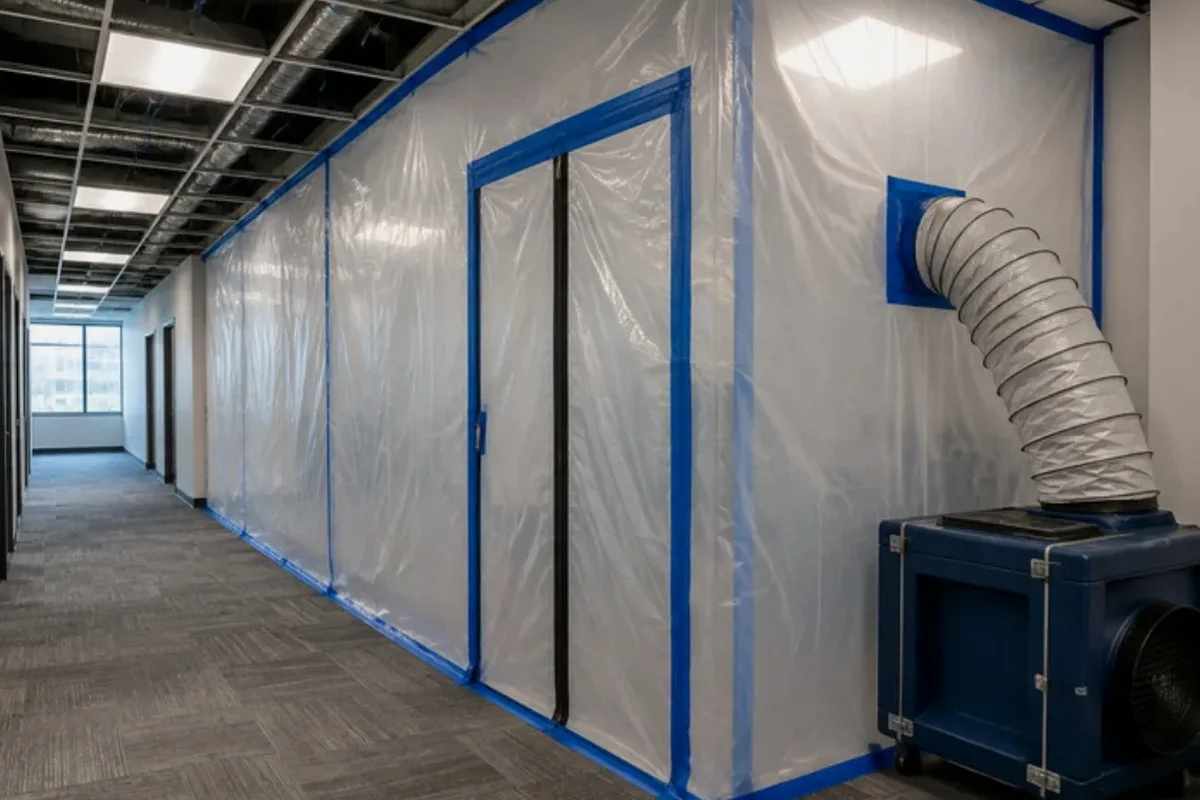
Two bids can differ widely because one lists containment, disposal and drying while another omits them. Line up area, materials, after-hours work, source repair and rebuild. A short written scope from each company lets you compare on equal terms, and exposes anything left out. It is a small step that heads off larger arguments later.
The walk-through
A company usually walks the space with the owner or manager, checks ceilings, walls and floors with a moisture meter and asks about the leak history, past repairs and any recent remodels. You should leave with a plain description of the affected area, the likely materials to remove and which trades are involved.
Seasonal building walk
- Spring: check roof drains, parapets and below-grade rooms after snowmelt
- Summer: inspect condensate lines and rooftop units
- Fall: clear gutters, drain outdoor lines
- Winter: watch unheated spaces during cold snaps
Write it down now while the facts are fresh.
Useful local contacts for Firestone
Colorado does not issue a state license for mold assessors or mold remediators. Contractor licensing here is handled city by city, so ask the company which local contractor license it holds for the rebuild part of the job.
The Town of Firestone Planning and Development Department handles building permits here, so that's the place to check before walls, cabinets or flooring go back in.
If you rent, give the landlord written notice of the leak or mold. Colorado's habitability law covers mold tied to dampness, and Colorado Legal Services explains the response times.
Nearby, the same kind of help is available in Longmont, Frederick and Dacono.
Commercial Mold Remediation questions in Firestone
Do we need a written protocol?
Should we test the air before remediation?
Can mold spread through the HVAC system?
Who fixes the roof or pipe that caused it?
More mold services in Firestone
Commercial Mold Remediation nearby
Helpful guides
Sources
Last updated: