Who pays and who hires often depends on the lease, so check whether the owner or the tenant is responsible before work starts. Either party can ask a local company to scope the problem. Call the number on this page to be connected with a local mold company in Broomfield.
The quiet places
Mold in commercial buildings often hides above drop ceilings, inside plumbing chases, behind vinyl wall covering and under flooring in back rooms. A visible spot may be only the edge of it. Companies use moisture meters and small inspection openings to see how far damp materials extend before they quote.
Roofs and flat-roof drains
Many commercial buildings along the Front Range have low-slope roofs where snow melts, refreezes and pools. A clogged drain or a failed seam can let water into the ceiling for weeks. Ice and thaw cycles in winter tend to open seams that look sound in summer, so older roofs near Louisville deserve a spring check.
Newer construction around 2001 usually has sealed envelopes and large shared HVAC systems, so a condensate or roof problem can reach many rooms before it is noticed.
Testing and verification
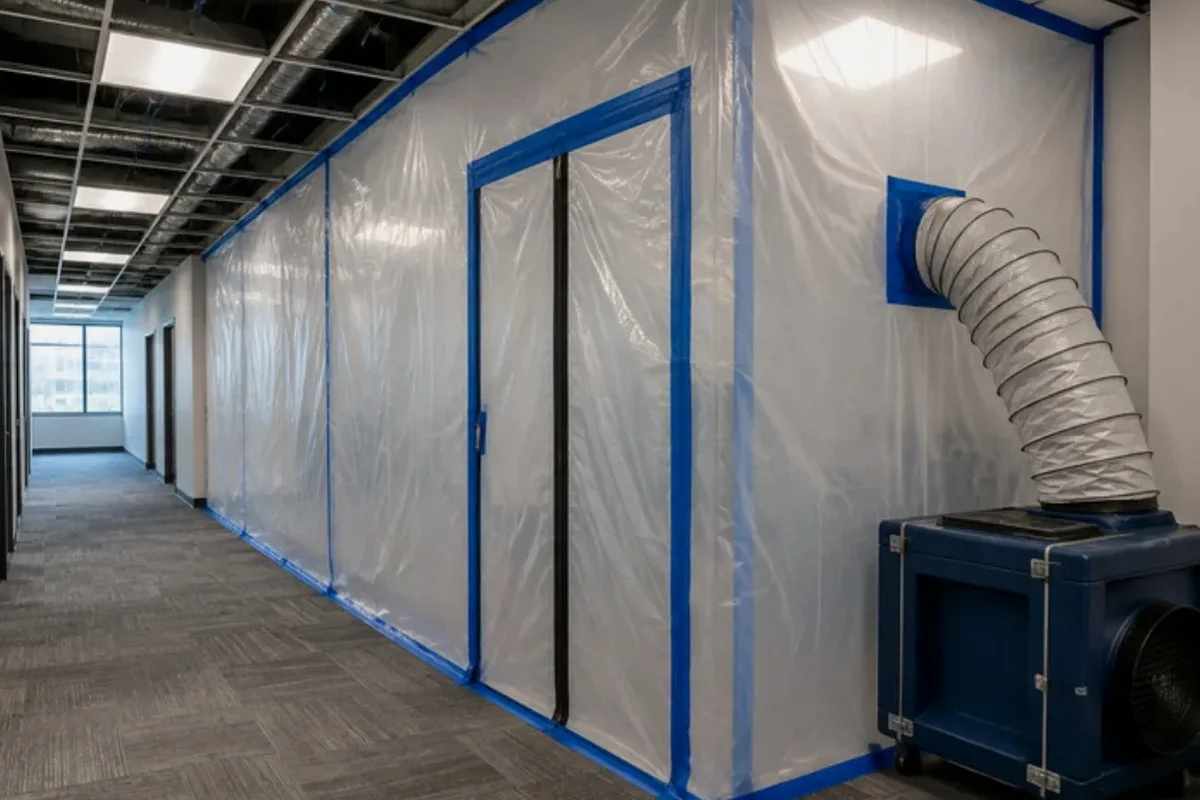
Some jobs include a third-party assessor who writes the protocol and checks the space afterward. That adds a line item but can add clarity for owners, lenders or tenants. EPA says sampling is usually unnecessary when mold is visible, so ask what question testing would answer.
The walk-through
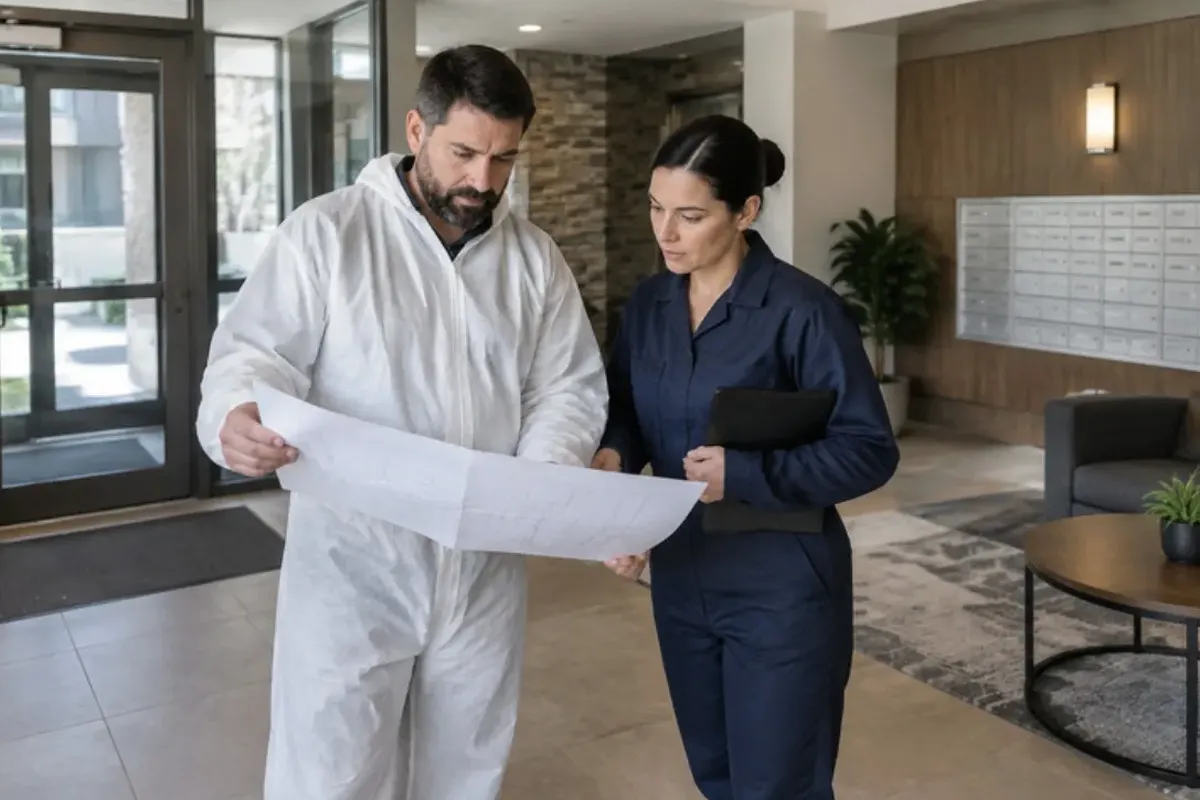
A company usually walks the space with the owner or manager, checks ceilings, walls and floors with a moisture meter and asks about the leak history, past repairs and any recent remodels. You should leave with a plain description of the affected area, the likely materials to remove and which trades are involved.
Keep humidity in range
EPA advises keeping indoor humidity below about 60 percent, ideally between 30 and 50. In a dry climate, the main risks are indoor sources: humidifiers, cooling equipment, kitchens, restrooms and poorly ventilated storage. A few small sensors in storage rooms and mechanical spaces can flag a problem early.
Useful local contacts for Broomfield
Colorado leaves contractor licensing to cities and counties and has no mold-specific license. Ask the company up front which local license covers any drywall or framing it replaces.
If the job grows into replacing drywall, cabinets or framing, ask whether the rebuild needs a permit from the Broomfield Community Development, Building.
Tenants should report mold to the landlord in writing first; Colorado law treats mold associated with dampness as a habitability issue, with set response times after notice.
Companies that take calls here usually also work in Louisville, Lafayette and Westminster.
More about Broomfield
Calls come in from across Broomfield, including around US-36 (Denver-Boulder Turnpike), US-287, Rocky Mountain Metropolitan Airport.
Broomfield provides an online floodplain search tool covering the whole city and county, and its floodplain standards go beyond FEMA's minimum requirements.
Commercial Mold Remediation questions in Broomfield
Do we need a written protocol?
Should we test the air before remediation?
Who fixes the roof or pipe that caused it?
What humidity should a commercial space aim for?
More mold services in Broomfield
Commercial Mold Remediation nearby
Helpful guides
Sources
Last updated: