Indoor mold in a dry Front Range climate almost always points to a water event, such as a roof leak, a burst line in a cold snap, a failed condensate pan or a plumbing chase that sweats. Call the number on this page to be connected with a local mold company in Aurora.

Small spot versus whole suite
EPA says a homeowner can usually clean under about 10 square feet, but that guidance is aimed at homes. In a commercial setting, even a modest patch may involve shared air handling, lease duties or staff concerns, so many managers hand off even small areas to a local company.
Slab and foundation moisture
Expansive clay soils along the Front Range can shift slabs and crack foundation walls. Water from irrigation, downspouts or snowmelt then moves toward lower levels. Below-grade storage, mechanical rooms and finished basement suites are the usual places to find damp drywall and floor coverings.
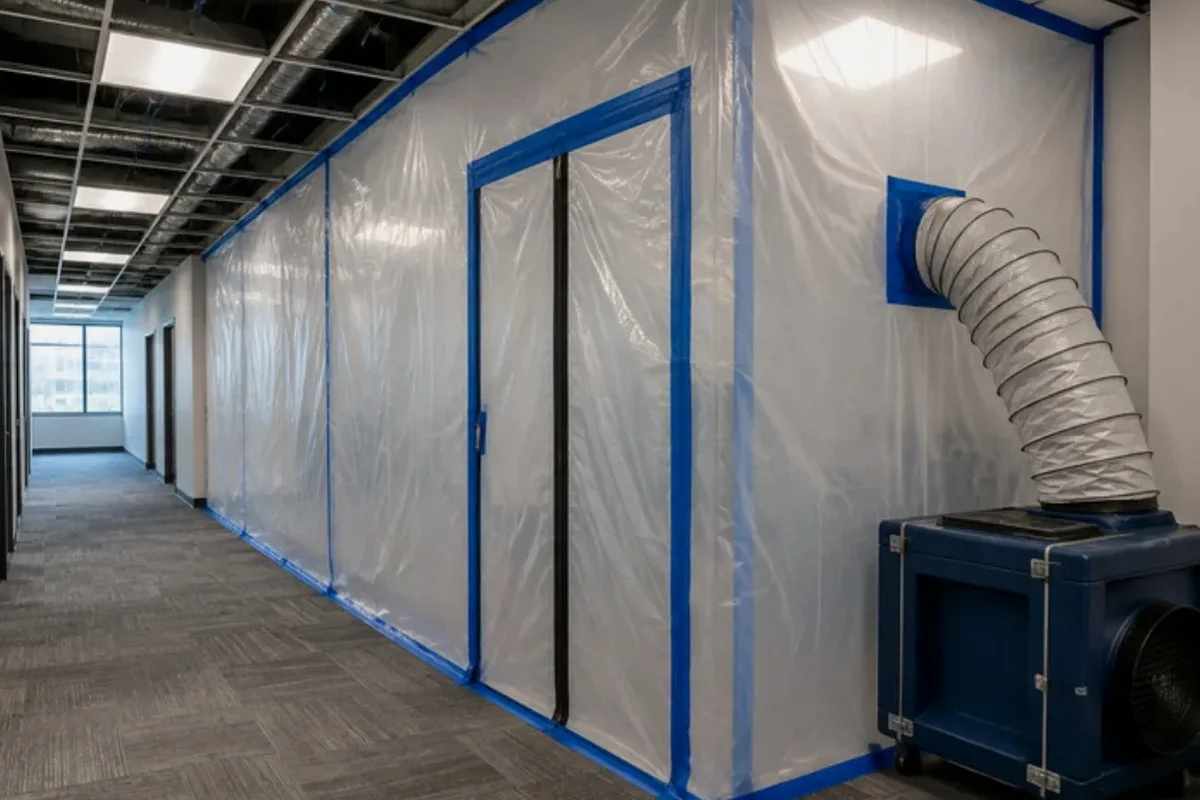
Containment and air control
- Plastic barriers and sealed doors
- Negative air machines with filtered exhaust
- Protected walkways for staff and tenants
- Air movers and dehumidifiers for drying
Each piece adds labor and equipment time, especially in larger floor plates. That detail saves a second site visit and lets the quote reflect what is actually there.
Permits, rentals and contractor checks in Aurora
Mold work in Colorado isn't covered by a state mold credential. Any repairs after cleanup fall under local contractor rules, which differ from one city to the next.
Remediation itself is cleanup, but putting the room back together can be permitted work; ask the contractor whether the Aurora Building Division needs to be involved.
If a landlord won't deal with a leak or mold, the Aurora Health and Housing Codes program takes housing complaints for addresses in Aurora.
Calls from Aurora are often matched with companies that also cover Watkins, Commerce City and Dupont.
Written protocol
For anything beyond a small area, a written protocol keeps everyone on the same page. It should describe containment, removal methods, drying goals, waste handling and what counts as finished. Share it with tenants, staff and the property manager so nobody is surprised, and keep a signed copy with the building records.
Maintain roof and drains
Clear leaves, grit and ice from roof drains before storms and after thaws. Have a roofer check seams around units, skylights and parapets. A small, early repair at a flashing is far easier than replacing wet insulation and ceiling grid later. Ask for the findings in plain language you can pass to your own manager or landlord.
Aurora at a glance
Calls come in from across Aurora, including around Interstate 225, E-470, Interstate 70.
Aurora advises homeowners to keep a battery backup for the sump pump and to consider separate flood and sewer backup coverage, since basement seepage and sewer backup are not covered by a standard policy.
Commercial Mold Remediation questions in Aurora
Who is responsible for mold in a leased space?
How fast should wet materials be dried?
What happens to ceiling tile and carpet?
Who fixes the roof or pipe that caused it?
More mold services in Aurora
Commercial Mold Remediation nearby
Helpful guides
Sources
- City of Aurora
- City of Aurora Neighborhood Support Division, Health and Housing Codes: housing complaints
- Colorado Legal Services: Warranty of Habitability
- EPA: A Brief Guide to Mold, Moisture and Your Home
- CDC: About Mold and Your Health
- Denver Community Planning and Development: Contractor Licensing
- Aurora: local background
Last updated: